Saturday, June 4, 2022

the intel trinity || 10 things I learned from this book.

Book Name : the intel trinity: How Robert Noyce, Gordon Moore, and Andy grove built the World's most important company

Author: Michael S. Malone

Genre : Non-Fiction/Technology

Book Post : 30


What is it about?: Before Steve Jobs there was Robert Noyce. Before Apple there was Intel. Before the start up culture we see today there was the time of the start of Silicon Valley. This book is the story of the origin of Intel. Its about one of the most influential persons in Technology, Robert Noyce. It is also about Gordon Moore, the author of Moore's Law and about Andy Grove, one of the finest management leaders ever. Together they made up the intel trinity. The team that made Intel not just another company but one of the most important companies in the world!  

How I came to read it : 
I was to meet a close friend of mine who works in Intel. So before going there I thought ill brush up my knowledge of Intel. So I picked up this book from the local library. 
   
Did I like it? : I absolutely loved it! This is one of those books which make a huge impact on the reader. I picked it up just to get an idea about Intel's story but I got much more than I expected. It will inspire you, give you life lessons, management tips, and so much more that by the time you finish it you will know that what you have just read is a phenomenal story of a phenomenal set of people which resulted in a phenomenal company. Kudos to the author for the flow of the book. Not once does it get boring. There is equal time devoted to all 3 subjects of the book. This has easily entered the list of top books I have read so far this year and I doubt it will go off it by the end of the year. 

10 things I learned from this book (of the many):

1. Traitorous eight: The Traitorous eight were a group of eight employees who left a company called Shockley Semiconductor Laboratory in 1957 and after unable to find a company which would hire them all together(since they did not want to split) they started their own company called Fairchild Semiconductor. This group included Robert Noyce and Gordon Moore. With the extremely talented bunch at the helm, Fairchild Semiconductor soon grew into a powerhouse in the field of semiconductors. It become directly or indirectly the point of origin for a number of amazing companies including Intel and AMD.  These spinoff companies came to be called 'Fairchildren'. 

2. Robert Noyce and Integrated Circuit:  Robert Noyce is credited with the invention of the Integrated Circuit. This invention is a strong candidate for the title of the greatest invention of the twentieth century. It got its inventor a Nobel Prize. Robert Noyce used Silicon in his ICs which led to the 'Silicon' in Silicon Valley. 

3. Gordon Moore and Moore's Law: Gordon Moore is the author of Moore's Law which states that ''the number of transistors in an Integrated Circuit doubles every two years. This is called one of the greatest laws or observations ever and it still endures today. 

4. Andy Grove: Andy Grove was the third employee at Intel after Robert and Gordon. He later served as the CEO of Intel and is widely regarded as one of the greatest business leaders of the 20th century. He was the one who guided Intel through its massive growth phase and as a consequence of it, led the entire Silicon Valley's growth. He was chosen as Time magazine's Man of the year in 1997. 

5. Product of the century: In 1974 Intel launched the Model 8080 microprocessor. It was a 8-bit microprocessor. It was a major advancement over everything preceding it and is credited with starting the microcomputer industry. 

6. All three stalwarts had very different personalities. Robert Noyce was loved by everyone and was deathly afraid of conflicts. He often passed over hard decisions regarding people management to his subordinates.  He also had a carefree attitude when it came to management style. Gordon Moore was more of a tech geek than a leader and his positions often kept him at a distance from hard decisions. Andy Grove was the hard taskmaster who often took the role of the harsh boss who got things done. He disliked Robert Noyce for his inability to take hard decisions but very much admired Gordon Moore. Robert Noyce at his end did not have any harsh feelings towards Andy Grove. The equations between these three was never all good or bad. It was always churning like a river in spate. Some consider this as precisely the reason why Intel survived and thrived through some of its hardest phases of it existence. Sometimes in a team you don't have to like each other you just need to have the qualities to thrive as a team. 

7. Andy Grove escaped Nazi oppression during childhood and eventually reached USA. His mother played a very important role in young Andy's survival. She was an extremely sharp woman. With his father called up to serve the army, Andy's mother was responsible for their livelihood and survival. She often had to move places in trying to escape the Nazi soldiers and in order to do this she had to make lightning quick decisions. This was something Andy observed and that got ingrained in his mind. Later in life he often stressed the importance of making quick decisions when the time requires it. 

8. Intel 4004: Intel 4004 is the world's first microprocessor launched in 1971. 

9. Some amazing names from Intel's history: Masatoshi Shima, Federico Faggin, Ted Hoff, Stanley Mazor.

10. Intel 8086: Intel 8086 chip had x86, the most important architecture in computer history. This was launched in 1981 and was still in use till the 2010s. 

Saturday, May 14, 2022

Insane Mode : How Elon Musk's Tesla sparked an Electric Revolution to end the age of Oil.

Book Name : Insane Mode: How Elon Musk's Tesla sparked an Electric Revolution to end the age of Oil.

Author: Hamish McKenzie

Genre : Non-Fiction/Transportation

Book Post : 29


What is it about?: This a breezy, casual and a general account of  electric car maker Tesla's story. Right from its beginning, to the challenges it faced and how it overcame all the hurdles to establish its presence in an industry which is notorious for its extremely high barriers to entry, this book traces it all. 

How I came to read it :
I randomly stumbled upon this book as I was casually checking out the books in the local library in downtown. EVs have always on my list to know more about so this seemed like a perfect introduction into the subject. 
   
Did I like it? : Its one of those books that you can finish reading quickly and it doesn't place too much demand on your mind. But that exactly makes it a breezy read. I read most of the book on my commute to work. Part 1 of the book starts off with the experience of the author and his father trying out a Tesla EV to check out how it feels. He then goes on to explain some of the issues or worries that people have with the concept of electric cars with range anxiety being one of them. Part 2 then shifts to Tesla's beginnings and how Elon Musk came into this industry. There is a lot of background on the work China was doing and continues to do in the area of EVs. Part 3 concludes with again a general outlook towards how Tesla survived when many of its competitors had written it off and also at the future of the EV industry and finally how the very competitors who had mocked Tesla had finally entered the EV market. 

Fun fact:

Of all the new American car companies started in the last 100 years only 2 have managed to survive in spite of the demanding challenges of the Auto industry : Chrysler and Tesla. 

Jerusalem: The Biography || Book post

Book Post : 28

Book Name : Jerusalem: The Biography

Author: Simon Sebag Montefiore

Genre : Non-Fiction/History


What is it about?: It is about the history of the city of Jerusalem. How it was settled originally and how it rose in prominence over the centuries. It is 544 pages long and goes over the different periods it went through: Judaism, Christianity, Islam, Crusades, Mamluks, Ottomans and finally the modern era.   

How I came to read it :
A couple of years ago I became interested in Saladin so I read a book about him and that got me interested in the Crusades so again I read a book about it. The entire focus of the crusades was on Jerusalem and that made me ask myself: Why is Jerusalem so important to the Abrahamic religions? So I got this book.  
   
Did I like it? : Loved it. After reading it I now have a much better picture of the history of Jerusalem and the ongoing Israel Palestine situation. Since its a sensitive topic, I will limit my post to this section. If you have any interest in knowing the history of Jerusalem read this book. Its worth your time. 

Friday, April 15, 2022

After Cooling: On Freon, global warming, and the terrible cost of comfort || 10 things I learned from this book.

Book Post : 27

Book Name : After Cooling: On Freon, global warming, and the terrible cost of comfort

Author : Eric Dean Wilson

Genre : Non-Fiction/Environment


What is it about?: After Cooling, written by Eric Dean Wilson, is at its core about the history of Air conditioning and how life on earth was almost at the verge of destruction at one point due to the effects of refrigerants. It traces the journey of the refrigerants from its invention to their observed effects on the ozone layer and the reaction of humans to the crisis.  

How I came to read it :
I was in the library to pick up another book when I noticed this book. I picked it up because air conditioning always interests me. After reading a book on the same subject last year I wanted to see what this book will add to it. 
   
Did I like it? : Overall this was an average read for me. Maybe I didn't find what I expected from it. I was tempted to stop reading it in the middle because there was another book waiting for me but I continued and I am glad that I did that. It gets more interesting in the later half. A simple description of this book is to say that its a history of refrigerants esp. Freon but that would be only a partial truth. It is much more than that. This was the first book that I read which made a connection between air conditioning and people of color. The author, on numerous occasions, makes it a point to mention how people of color were affected or left out of all the progress in human comfort that was taking place. I did not find this perspective in any other book that I read on the same subject.

There are also a lot of meditative passages on how to live meaningfully and morally in a world where it is increasingly becoming difficult to live without ACs, which we know are not without their faults. In British Columbia, where I live, last summer temperatures were unusually high and sparked a wild rush for ACs. My friend wanted to buy a fan and we both went in search of one in the supermarkets and to my surprise everything was sold out. That incident was running in my mind while reading this book. This rumination by the author on human comfort and the human response to it reminded me of a line from a different book I was reading at the same time. In that book, the author describing another medieval age author says about him ''in his hands a history of walking sticks becomes an essay on aging''. This book starts off as a history of Freon but it is much more. 

10 things I learned from this book (of the many):

1.  Ill start off with a quote from the book; ''The closest we've come to the destruction of all life on Earth is not by nuclear holocaust. It's not by bombing. It's not by deliberate explosion, not by intention at all. It's not by natural forces, either, not by plague, not by famine, not by earthquake, eruption, or erosion-certainly not by meteorite, which long ago ended the nonavian dinosaurs.'' The close we've came to destruction of life was when, because of our rampant release of refrigerants (CFCs) used for Air Conditioning, created a huge hole the size of North America in the ozone layer. Without the ozone layer life on earth is not possible. We did manage to end the production of CFCs before the damage was irreversible thus saving ourselves. 

2. Carbon dioxide(CO2) traps heat. This is part of the Greenhouse gas effect and is an essential part of Earth's process of maintaining a stable atmosphere. But CFCs which were/are refrigerants in Air Conditioning trap more than 10,000 times the heat trapped by CO2.  CFC-12 has a Global Warming potential of 10, 200. 

3. We owe our control of humidity to three people : Alfred Wolff, Willis Haviland Carrier and Stuart Cramer.

4. There was time when people opposed ventilation. There was a group called the Open Air Crusaders who believed that the whole ventilation industry is a scam. They believed that closed windows would lead to diseases and called for Fresh Air in buildings. 

5. Story time: Carrier designed a new AC system for a theatre in New York and planned to use a safe imported refrigerant, Dielene, from Germany in it. However the strict New York City building code did not have it listed as an approved refrigerant.  Carrier applied for a special permit but it was refused by the city's safety chief. The primary reason was that the safety chief was not convinced of its safety. Carrier's multiple attempts to get it approved failed. Now an angry Carrier simply walked into the office of the safety chief's office, poured a splash of liquid dielene into a jar, set it on the desk, lit a match and threw into the liquid. The match continued to burn in the liquid but there was no explosion. Carrier made his point but was shown out of the office immediately. After much back and forth negotiations later the safety chief finally gave the permit but with new safety precautions added.  

6. The person who invented Freon is also the person who invented leaded gasoline giving him the dubious reputation of inventing two of the things that had the most negative impact on the Atmosphere. This was Thomas Midgley Jr. To me his story sounds a tad bit sad. Here was a brilliant inventor who was creative and quite obviously was a genius. It was not his intention to destroy the atmosphere but who knew his inventions will turn out the way they did. His Wikipedia page makes for both inspiring and sad reading esp. the Legacy section.   

7. Story time: Early internal combustion engines commonly made loud sound which came to be called 'knocks'. Nobody knew what caused it and how to stop it. Then the problem was handed over to Thomas Midgley Jr to solve. He was just twenty something then. Working with his boss, he figured out that the fuel was not vaporizing quickly leading to knocks. They needed to figure out how could they get it to heat more quickly. They thought that maybe if they added the color red, which due to its wavelength, enabled absorption of more heat, to the fuel then the problem will be solved. This method sounds unscientific but they tried it anyway. They went to get some red dye only to see they were out of stock so they took the closest thing: a dark purple iodine. They added this iodine to the fuel and surprisingly the knock stopped. This was one of those one-in-a-million odds of history. 
 
8. The story of creation of CFC-12 is extremely interesting and again had one in a million odds of success. Its too long to recount here but is worth reading. In case you pick up this book go to page 140 and start from chapter 3. 

9. In another irony of life in a never ending list, Midgley contracted Polio in his 50s, the same disease which Midgely helped eliminate from United States by inventing Freon which would help keep the Vaccine cool and thus effective.  

10. It was F Sherwood Rowland and his student Mario Molina who first raised the alarm about the effect of CFCs on the atmosphere. Both of them along with Paul Crutzen won the 1995 Nobel for chemistry for explaining how the ozone layer is formed and decomposed through chemical processes in the atmosphere.

Saturday, April 9, 2022

10 things I learned from the book | Genghis Khan and the making of the modern world

Book Post : 26

Book Name : Genghis Khan and the making of the modern world

Author : Jack Weatherford

Genre : Non-Fiction/History


What is it about?: It is, as the name says, about Genghis Khan the founder of the Mongol Empire who lived from 1162 AD to 1227 AD. Mongol empire became the largest contiguous empire in history after his death. This book recounts the life story of the khan from his birth through his childhood and how he ultimately became the great khan. And it continues after his death to his descendants who became some of the most influential kings in their own right. And most importantly this book covers the contributions of the Mongols in the making of the modern world. They contributed a lot and the world would have been much different if their contributions are taken out. Read below to find out some of those. contributions. 

How I came to read it : 
I was reading another book on the crusades when there was a passing mention of the Mongols and the terror they created in the people then. This piqued my interest and I picked up this book from my local library branch.  
   
Did I like it? : Yes, this book is a good read. The author moves the narrative fluidly and quickly with interesting anecdotes thrown in now and then. There are no boring passages in this book. There is a lot of information about how the history of the Mongols was uncovered and the many sacrifices the scholars had to make to obtain the information and preserve the history. Genghis Khan was such an influential figure that hundreds of years later establishments were still fearful what free information about his life and times can do to people so the Soviets kept much of his info under wraps. The ending of the book is very poignant. 

For me this book was an eye opener. Fed by the memes and the false information floating around the internet I had very different views of the Mongols and Genghis Khan. This changed all of that. The Mongols were not what we view them today as savages and primitive people who knew only to fight. They were much more than that.  

Top 10 things I learned from this book:

1.  The first and foremost point that I would like to get out of the way before we move onto other points is that Genghis Khan was not a Muslim. With a lot of Islamophobic sentiment around the world these days Genghis Khan is viewed as another savage king in a long list of brutal Muslim kings(which again is a subject of an entirely different and complex discussion so Ill skip that for now). But the great khan was not Muslim. The word 'Khan' is a common Muslim surname in the subcontinent but it actually is derived from the historic title 'Khan' meaning a military chief or ruler. It originated in central Asia/Europe. Genghis Khan was shamanist. 

2. Genghis Khan is considered to be the one of the greatest generals the world has ever seen and he is considered to have perfected the art of siege warfare to such an extent that he ended the era of walled cities. 

3. In 20 years, the Mongol army conquered more lands than the Romans had done in 400 years. This tells us the Mongol military tactics and the later administration of the conquered lands was very effective. 

4. One of Genghis Khan's greatest achievement was the creation of a new world order. Before him there were pockets of civilizations in the world and they knew nothing of each other. For example, there were no connections between China and Europe. By the time of his death, Genghis connected them with diplomatic and commercial contacts which survive till day. 

5. Mongols are known to have created the first International Postal system. 

6. He granted religious freedom to all people under his realms. In this Mongols were doing much better than Europe where people were butchering each other over religious differences. 

7. Mongols are considered Civilization's ''unrivaled cultural carriers''. As the author states, Mongols ''made no technological breakthroughs, founded no new religions, wrote few books or dramas, and gave the world no new crops or methods of agriculture. Their own craftsmen could not weave cloth, cast metal, make pottery, painted no pictures, and built no buildings. Yet, as their army conquered culture after culture, they collected and passed all of these skills from one civilization to the next. The Mongols deliberately opened the world to a new commerce not only in goods, but also in ideas and knowledge.''

8. The Mongols sponsored the most extensive maps ever assembled. 

9. Europe was heavily influenced by Mongol rule. ''In nearly every country touched by the Mongols, the initial destruction and shock of conquest by an unknown and barbaric tribe yielded quickly to an unprecedented rise in cultural communication, expanded trade, and improved civilization. In Europe, the Mongols slaughtered the aristocratic knighthood of the continent, but, disappointed with the general poverty of the area compared with the Chinese and Muslim countries, turned away and did not bother to conquer the cities, loot the countries or incorporate them into the expanding empire. In the end, Europe suffered the least yet acquired all the advantages of contact through merchants such as the Polo family of Venice and envoys exchanged between the Mongol khans and the popes and kings of Europe. Seemingly every aspect of European life—technology, warfare, clothing, commerce, food, art, literature, and music—changed during the Renaissance as a result of the Mongol influence. In addition to new forms of fighting, new machines, and new foods, even the most mundane aspects of daily life changed as the Europeans switched to Mongol fabrics, wearing pants and jackets instead of tunics and robes.''

10. The word ''hurray'' is derived from the Mongols. It was a Mongol exclamation for bravado and mutual encouragement.  

There is much more to be written but Ill limit myself to these 10 fascinating points. Read the book for more! 

Sunday, March 13, 2022

Top 5 books I read in 2021


 These are the best books I read in 2021. 

Links to my posts about them below:

1. A Brief History of Creation

2. Simply Electrifying 

3. The Battery

4. Cool: How Air Conditioning changed everything

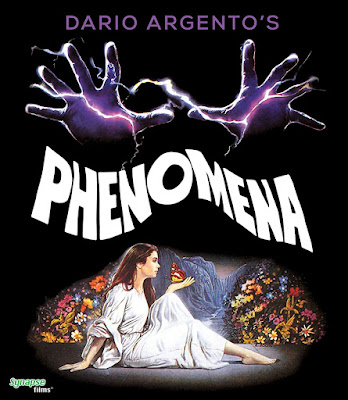
Phenomena (1985) : Another of Dario Argento's classics.


I recently watched Dario Argento's 1985 Italian horror movie 'Phenomena'. After watching 'Suspiria' by the same director, which became one of my favorite horror movies ever, I am slowly checking off all of his movies. Dario has a unique style of horror. Something about it reminds me of gothic horror short stories. Phenomena is a story of a girl who realises she possesses a sixth sense of communicating with insects and uses this ability to track down a serial killer on the loose. If Suspiria created a sense of dread with exquisite, claustrophobic set pieces then Phenomena does the same with wide open spaces. Set in Switzerland, the stunning locations and pretty towns are shown in an eerie light. Especially the bit about the ever blowing wind. And as always the soundtrack by Goblin is perfect for the theme. The combination of Dario Argento and Goblin has to be one of the best in the industry. This was my third movie of Dario Argento and I am now a 'pakka' fan.

Mary Shelley : One of the women in history that I admire the most

Mary Shelley, the author of Frankenstein, is one of the women in history that I admire the most. She is often credited with creating the genre of science fiction as we know it today. The story of how this masterpiece came about is legendary.

In 1815, Lord Byron, PB Shelley, Mary Shelley and John Polidori gathered together to spend some days in a hotel in Geneva, Switzerland. How these famous got together for a trip is altogether another story. To spend their time, Lord Byron suggested a competition to see who can come up with the best ghost story. This simple weekend challenge resulted in the renaissance of two separate genres, science fiction and horror. Mary Shelley came out with the groundbreaking Frankenstein and John Polidori with The Vampyre, which strongly influence Bram Stoker's Dracula. This whole story itself has a gothic quality to it and ranks up there with all my other favorite horror stories.

To be in the company of such great people and then trump them all with a book that has cemented its place in human history is no mean achievement esp. for a girl who was just 19 at that time. She was largely overshadowed in her lifetime by her more famous husband PB Shelley but over the years she has been recognized as a major figure in the romantic movement of that era.

Saturday, February 26, 2022

10 things I learned from the book | Built: The hidden stories behind our structures

Book Post : 25

Book Name : Built : The hidden stories behind our structures

Author : Roma Agrawal

Genre : Non-Fiction/Engineering

What is it about?: 'Built', written by Indian-born engineer Roma Agrawal, is about how structures are built and the engineering that goes behind it. Each chapter she focuses on one aspect of the process. There are chapters on forces, fire, materials, water etc. Roma is, as she mentions multiple times in the book, a nerd when it comes to engineering.  Accordingly she goes back in history, looks at concepts which we wouldn't normally think about, visits places just to take a look at the buildings in person and strokes the concrete wherever she goes. All the while she takes us along on her journey. She talks about how humans have tunneled through mountains, bridged mighty rivers, built sky hugging buildings, built sewage systems to support populations of millions and many other feats. 

How I came to read it :
Found this book while randomly scrolling through the library shelves. 
   
Did I like it? : Yes, absolutely. This is one of the finest books on engineering I have read. Roma makes it an easy read. There are no complicated descriptions or math anywhere though personally I wouldn't mind if they were included. The love Roma has for her subject can be clearly seen. And best part is she looks at the past to explain many of the themes she explores. Ranging from the Persians, Romans and Harappans she visits many famous builders of the past. I am a fan of history so this was something that I loved. There are also many personal anecdotes which gives the book a nice personal touch. In places where she is explaining any concepts there are hand drawn illustrations which gives the feeling of being present in a classroom. She almost takes a teacher like stance while explaining some of the concepts adding to the classroom feeling. 

Top 10 things I learned from this book:

1. There are 3 ways in which wind can affect a structure. One, wind can topple a structure if its light. Two, wind can cause a building to sink into the ground if the ground is weak. Third, wind can make a structure sway like a boat rocking at sea.

2. The Romans were master builders. They had a very good understanding of the concepts involved in building big structures. Marcus Vitruvius Pollio who was born in 80 BC is sometimes called the 'the first architect'. He wrote a hugely influential ten volume treatise on the design of structures called De Architectura.

 3.  Emily Warren Roebling was engineer who worked on the building of Brooklyn Bridge in the 1870s. In a profession dominated by men she made a mark for herself. Her husband was the Chief Engineer of the project but got bed ridden when he developed the Caisson's disease during the construction. She served as the liaison and supervisor of the construction communicating between her husband and the on site personnel. But slowly over the duration of the project she took on a more authoritative role and influenced many decisions. She was technically brilliant and was held in high esteem by all who worked with her. 

4. Every building has a core. It can be a concrete core or a steel core. A core is at the centre of the building and is usually well hidden. They usually house essential services like elevators, stairs, ventilation ducts etc. 

5. Taipei 101, which was at one time the tallest building in the world has a massive pendulum housed in some of its top floors. Weighing a massive 660 tonnes, it is the heaviest pendulum in a skyscraper anywhere in the world. The purpose of this ball is to damp the vibrations produced in the building during earthquakes or high winds. It absorbs the energy created by the movement of the building and avoids resonance. In August 2015 Taiwan was stuck by a typhoon which had winds blowing at around 170 km/h but Taipei 101 was unaffected because of the pendulum which recorded movement up to 1 m, which is its largest movement ever recorded.  

6. Fazlur Khan, a structural engineer from Dhaka, Bangladesh came up with the brilliant innovation of putting a building's stability system on the outside. Kahn created a external skeleton using large prieces of diagonal bracing to form triangles. This system is called Tubular system and it has been used in many famous buildings around the world including in Burj Khalifa which uses a variation of Fazlur's innovation. He is called the 'father of tubular designs for skyscrapers'. 

7. There is mention of one of my famous engineers, Isambard Kingdom Brunel (I like him for his inventions in the areas of railways and ships). He played an important part in building the tunnel below the river Thames (1825 to 1843). His father Marc Brunel was the Chief Engineer on this project. Marc invented the first tunneling shield which was an ingenious invention. He was inspired by the actions of a ship worm called Teredo Navalis. This worm, with the help of its horns on the top of its head, powdered the wood in front of it and ate it ast it moved forward. It then excreted this digested mixture behind it, which lined the tunnel it just created, shoring it up. This created a strong passageway behind it as it moved forward. 

8. When did humans started building sky scrapers? What happened that allowed us to build those tall structures? The answer to this question is Henry Bessemer. Before Henry we did not have materials strong enough to withstand both compression and tension. The materials used earlier like bricks and mortar are good in compression but not in tensions (when pulled apart). Steel, which is simply Iron with 0.2% Carbon content, was perfect. It was good at both compression and tension. But at that time it was very expensive to manufacture. Henry Bessemer, in 1856, solved this problem with his use of a closed furnace with warm air running through it. His method was a huge step and mass manufacture of steel started off. This lead to massive expansion of the railway networks and humans started to build skyscrapers. 

9. The idea of reinforcing concrete with metal started with a man who was fed up of his clay pots cracking up. Joseph Monier, a French gardener in the 1860s was frustrated seeing his clay pots constantly cracking so he tried making them with concrete. Those cracked too. He then randomly added a metal grill to the concrete. This solved the problem. Metals are good in tension, concrete is not. By combining these two materials Monier created a perfect combo. Steel reinforcement is a common way of building today. 

10. Romans built the world's first apartment buildings. These were called Insulae and sometimes they reached 10 storeys tall which was a first at that time. By AD 300 the majority of Rome's population lived in Insulae which numbered over 45,000 in the city whereas normal single family homes were around 2000. 

There are many more interesting concepts and facts in the book. Read it to find out more! 

Sunday, September 19, 2021

10 things I learned from the book || The Battery : How portable power sparked a technological revolution

Book Post : 24

Book Name : The Battery : How portable power sparked a technological revolution

Author : Henry Schlesinger

Genre : Non-Fiction/Science


What is it about?: It is about the history of how batteries were developed over the years. From the twitching of a frog's leg to the the nickel hydrogen batteries in the Hubble space telescope the book traces the many observations, discoveries, inventions and break throughs that lead to the batteries that we see in everyday use today. 

How I came to read it : 
I like to casually browse books in a library and on one such visit I saw this book and given my background in energy I had to read it. 
   
Did I like it? :  Yes I did. It starts off nicely, becomes a tad bit bland in the middle but becomes interesting once again as the military uses of batteries section comes up. I learnt a lot of new facts and trivia about batteries and the equipment they power.  

Top 10 things I learned from this book: 

1. We all the know the 'Bazooka', the rocket launcher which can be fired from the shoulder. It forms a quintessential part of so many action movies. The original bazooka was ignited by two standard sized D cells on the stock though later models eliminated the batteries altogether. Fun fact: The name 'Bazooka' was given by soldiers, after a musical instrument played by a radio comic called Bob Burns. 

2. Its not perfectly clear who invented the Walkie Talkie and is credited to many inventors including the engineering team at Motorola. I will only mention the Canadian connection here. Donald Hings, working at the Consolidated Mining and Smelting Company in Vancouver is said to have the invented a portable 2 way radio in 1937. 

3. Duracell was originally called P R Mallory company and it started off by manufacturing Mercury cells. This was the first new battery chemistry in over a century(better than the carbon-zinc config used in the majority of applications then). This was in the 1920s.  Sam Ruben was the one who invented the Mercury Cells. 

4. There is a law called Faraday's Law of Electrolysis which states that in order to double the output of any battery, the amount of material in that battery must be doubled. The battery industry hit this wall many times and found ways around it. 

5. World's first electric watch was released in 1957 by a company called Hamilton(this company was eventually taken over by Swatch). This electric watch was called Hamilton 500 and was priced at $175(around $1,300 today). It had a $1.75 energizer battery which was not too reliable. Elvis Presley bought a Hamilton Electric watch and so did Rod Sterling, the host of Twilight Zone. Will Smith and Tommy Lee Jones wore Hamilton Electrics in the 'Men in Black' movies. 

6. Sonotone Corporation, a manufacturer of hearing aids became the first company in 1952 to offer a consumer product using transistors. Transistors were mostly used in military applications till then. AT&T provided the license to Sonotone for the use of transistors. Interestingly the license provided to Sonotone was royalty free in observance of Alexander Graham Bell's devotion to the deaf. AT&T was established by Bell and his father in law. 

7. TR-55, a transistorized radio model was released by a then young 10 year old company called the Tokyo Telecommunications Engineering Company. TR-55 was only available in Japan. The company wanted to release its next model TR-63 in the US too. For the exports the company changed its name to something that Americans can easily pronounce: Sony. TR-63 was a huge hit which ultimately popularized the pocket radios.  

8. This one is more of a fun fact. Its common that technical advances attract conspiracy theories. We are living in the age of misinformation so we are pretty used to this but the world was not short of conspiracies in the 50s too. One of these theories said that transistors were a product of reverse engineering alien technology salvaged from a crashed alien spaceship.

9.  In 1973, Sharp released a pocket calculator called Elsi Mate EL-805. It housed 5 Integrated Circuits and was less than an inch thick. It could run for 100 hours on a single AA battery. This power consumption was 1/9000 of other battery powered calculators on the market. This was chiefly because this calculator used LCD(Liquid Crystal Displays) for the first time ever. This was a big turning point. 

10. The Hubble Space Telescope, launched in 1990, had six 125 pound rechargeable nickel hydrogen batteries. Scientists and engineers at that time estimated their life expectancy to be around 5 years. They lasted for 19 years!   

Saturday, September 4, 2021

10 things I learned from the book || Cool : How Air Conditioning changed everything

Book Post : 23

Book Name : Cool : How Air Conditioning changed everything

Author : Salvatore Basile

Genre : Non-Fiction/Science


What is it about?: A book detailing the history of Air Conditioning right from its earliest beginnings to the modern era. As the author states there were two struggles in the story of Air conditioning: one was actually making a perfect cooling device and the other was to convince people that they needed such a device.

How I came to read it :
With my recent career change to energy efficiency in buildings I wanted to read books about Heating, Ventilation and Air Conditioning. A quick google search lead me to this book and I obtained it by making an Inter Library Loan request from the Okanagan Regional Library. Also the recent heatwaves in Canada resulting in a huge surge in demand for home ACs played a factor.
   
Did I like it? :  This was a decent read. Not overly exciting and at the same not too bland it was an okay read. It gets a bit repetitive in the middle but slowly pics up pace at the end. 

Top 10 things I learned from this book: 

1. The first proper Air Conditioning unit was invented by Willis Haviland Carrier in 1902. Yes the same Carrier which is a huge AC manufacturing company now. The first AC was built for a company called Sackett-Wilhelms Lithographic and Publishing company. The summers of 1900 and 1902 were very hot and humid and a large amount of paper stock was ruined because of it. So an Air Conditioning system was built for them by Willis Carrier (while working for Buffalo Forge) which not only kept the facility cool but also kept the humidity under control.  

2. Willis Carrier mentioned that when the problem of the above publishing company was assigned to him to solve he did not even know what Air Humidity was. Imagine Carrier, who is almost regarded as the father of AC, not knowing what Air humidity was. This only reinforces the fact that it doesn't matter if you don't know something, what matters is how you move from that point. Another modern example of this would be Elon Musk who knew nothing about Rockets. Now he has started off a revival of interest in space with his company SpaceX. 

3. In 1922 it was Willis Carrier again who invented the first centrifugal compressor, a very important piece in every modern AC system. 

4. The first Air Conditioned plane was the Boeing 247 operated by United Air Lines. It started operation in 1934 and was the first 24 hr coast to coast flight.

5. The first Air Conditioned skyscraper was the Milam building in San Antonia, Texas. For the first time 21 stories of office space were Air conditioned, a remarkable achievement at that time. It was Carrier who installed this system. This was in 1928. 

6. Fun Fact: When the 103 floor Empire State Building was built in 1931 it was the World's tallest building and it had no Air Conditioning. None at all. 

7. There was a time when theatres did not have ACs and watching a play in the summers was known to be a tough ordeal. People falling unconscious because of the heat was a common recurrence. This is the reason theatres were one of the earliest adopters of methods to try to cool the air. 

8. In those days (1800s and early 1900s) people believed that heat is something that is nature's way and it shouldn't be messed with. It took a lot of convincing by the early pioneers of ACs to change that view. ACs sort of had a 'Personal computer moment' in the early 1900s when most people believed that a personal home AC system is not needed and what use could an AC actually have for a small home. The 1950s changed all that and ACs were soon a rage. 

9. In 1911, Willis Carrier published a paper called the 'Rational Psychrometric Formulae' at a meeting of the American Society of Mechanical Engineers. This is regarded as the most significant document prepared in Air Conditioning. It presented the correlation between temperature and humidity. Engineering students still learn those formulae and I did too when I was doing my Bachelor's in Mechanical Engineering. '

10. A textile Engineer from North Carolina, Stuart Cramer was the first person to coin the term 'Air Conditioning' 

Saturday, August 21, 2021

Book Post : Apollo's Legacy : Perspectives on the Moon Landings

Book Post : 22

Book Name : Apollo's Legacy : Perspectives on the Moon Landings

Author : Roger D. Launius

Genre : Non-Fiction/Science

What is it about?: Written by NASA's chief historian from 1990 to 2002 this book is a history of the Apollo program, which put humankind on the moon, and also talks about different points of view of the program and how some of them have changed or not changed over the years. 

How I came to read it : 
Casual browsing in my local library lead me to this book and since recent news have been dominated by Jeff Bezos and Richard Branson space flights I thought Ill read something about Humankind's biggest achievement till date. The moon landings. 
   
Did I like it? : A bit on the fence on this one. So unlike my usual posts I am going to keep this one a bit short. If you are looking at purely the story of the Apollo missions then this book is not the one. There are a few chapters on the actual story but the rest of the book is about the perceptions of the people about the achievement. The author also takes a look at the different aspects of the whole endeavor. The technology, the astronauts, useful research that has come out of it, its impacts on everyday life and how people remember it now. He also talks about the three main narratives that sprang up during and after the moon landing missions. One is that the whole mission was a technological high and it has resulted in many useful scientific advances which have translated into human life. The second is that there was no need for man to go to moon at that point in time as there were a number of other problems where efforts could have gone in and that would have resulted in much better results for humankind. The author explores these two points in depth often jumping from the past to the present. Surprisingly the author devotes an entire chapter to the third narrative: the conspiracy theories. The fact that a number of prominent people had to even entertain the existence of these conspiracy theories shows how ignorance and stupidity when spread into large numbers poses a real problem. Overall, the book is interesting if you are interested in the perceptions of the mission and not the mission itself. I am not in that category so this was a bit of uninteresting read for me. Twice I thought of abandoning the book but soldiered on just to finish what I started. 

PS: I believe that moon landings were indeed a technological marvel and it has helped humankind progress further in science and technology. Also, I believe that men have indeed landed on the moon and its not just some kind of a big fake set up. 

Sunday, August 1, 2021

Book Post : Simply Electrifying : The Technology that transformed the world, from Benjamin Franklin to Elon Musk

Book Post : 21 

Book Name : Simply Electrifying : The Technology that transformed the world, from Benjamin Franklin to Elon Musk

Author : Craig R. Roach

Genre : Non-Fiction/Science

What is it about? : This book traces the journey of electricity from its earliest days when it was nothing but a curiosity to the present when we cant even think about living without electricity. The book is neatly divided into 5 major phases of electricity's journey. 
Part 1: The Age of Franklin : A Time of Awe and Discovery
Part 2: The Age of Edison: Let there be light (and power)
Part 3: The Age of Big: Big Government, Big Power Plants
Part 4: The Age of Harm: Crisis, Change, and Scandal
Part 5: The Age of uncompromising belief  

How I came to read it :
When I moved to Kelowna one of the first things I did was check out the local library branch. Kelowna has the Okanagan Regional Library and while casually browsing through the books I spotted this book. I have been reading a lot of books on electricity lately and this seemed to be a good addition. 
   
Did I like it? : Yes I did. The book starts off nicely with Benjamin Franklin and James Watt, peaks with Michael Faraday, Maxwell, Tesla, Edison, Westinghouse, slowly starts to decline with Samuel Insull and gets a bit boring in the middle when talk moves to government, depression and policies. It ends on a high with George Mitchell and Elon Musk.  Overall what I loved about the book is how neatly the author has divided the different phases of electricity's journey. There is discovery, expansion, exploitation and finally a hope for a cleaner future. 

During the early years its mostly about how electricity was noticed and how curious minds like Ben Franklin set about investigating it. The author makes an interesting point here. Today we might know Benjamin Franklin as one of the founding fathers of USA and the general image is that his work on science was secondary. But the author says that he was a scientist first. His success, fame and respect he enjoyed both in America and Europe gave him the leverage to become a great statesman. The book is littered with interesting insights like these on many personalities and ideas. After, Franklin comes James Watt whos invention of the steam engine made the people dependent on machines and this set the stage for the development of the electricity run motors and the whole electricity infrastructure laid out by Edison, Tesla and Westinghouse. These days whenever discussions about inventors related to electricity come up people are quick to mention Edison vs Tesla. But there was a third person in this saga who seems to be forgotten in the general public. This was George Westinghouse. A famous inventor in his own right, his invention of the air brake changed the railways forever. After his success in the railway industry he turned his focus to the nascent electricity industry.  A brilliant entrepreneur in addition to being an inventor, Westinghouse took the path of developing the Alternating Current (AC) system. The war of the currents, AC vs DC was mostly Westinghouse (AC) vs Edison(DC). It was Westinghouse who recognized the talent of Tesla and employed him in his company. I feel its a shame that Westinghouse is largely forgotten today.

Next comes one of the most divisive personalities of the book Samuel Insull. Insull like Westinghouse remains largely forgotten today but he is the person responsible for spreading electricity across the country and made it accessible to a majority of the population. He is also responsible for the tariff structure of electricity later. Both sides of his story are presented here and the trial details of Insull make for interesting reading. Then comes Franklin D Roosevelt and his New Deal. Then there is talk of the time of big projects like building of Hoover Dam and Tennessee Valley Authority. The age of Harm stars off with talking about the person 'who started it all' Rachel Carson and her landmark book 'Silent Spring'. Then a large portion is dedicated to the California electricity crisis of 2003. A major portion of the book talks about deregulating of the electricity business. It was one of the most boldest moves in business and there are still debates about it going on even today. And the last part is about Obama, George Mitchell and Elon Musk. Leaving aside the criticism of Musk the author makes the point that at least he is making electricity and the science related to it cool again. 

One of the points I loved was that that electricity is a revolutionary force. The author says that during the early stages of electricity's development there was a sense of scientific adventure and excitement which seems have dwindled down recently. No longer do people associate electricity with scientific achievement or discovery. And this is so true. When I look at electricity related news its all about policies, regulations, prices etc, all important stuff undoubtedly but pretty mundane. There is no sense of scientific excitement, if I can use that term. Hopefully things change in the future!

Overall 'Simply Electrifying' is a pretty decent read and I enjoyed it!

Saturday, June 19, 2021

My top 5 Horror Movies (Part 2)


The last post I wrote about my favorite horror movies was in 2015. Its been almost 5 years since then and my list of favorites has now a number of new additions. Without further ado here are my favorite horror movies (in no particular order) since that last post. 

1. The VVitch

The VVitch (that's how its spelled in old english) is the debut feature of Robert Eggers who is considered one of the 'hottest' horror directors working today (along with Ari Aster). One of my top 3 horror movies of recent times, VVitch tells the story of a couple in 1630 who's youngest son disappears. Suspicions turn towards their eldest daughter who is suspected of Witchcraft. Bordering on the style of fairytales of the Grimm's brothers (not the fairytale of the Disney kind) The VVitch stays true to the period it is set in with old English dialogues and the details of the living conditions. Full of atmospheric horror and unsettling scenes, it is a Slowburn horror. The tension builds slowly and it never fully eases till the ending. It has some of the best witch depictions I have seen so far. The best scene comes quite early in the movie, the eldest daughter is playing a game of peekaboo with her youngest brother. She covers her eyes three times and uncovers it making the baby laugh, the fourth time when she opens her eyes, there's no baby. 

Why I liked it: Slowburn horror, extreme tension in the air, unsettling scenes and unexpected twists. 


2. The Wailing

The Wailing is a Korean horror movie about strange happenings in a town: people killing their family members and looking like zombies the next day. A police inspector is tasked with investigating these murders. The rural setting immediately brings to mind the classic Korean movie 'Memories of Murder' but here what looks like elements of supernatural soon turn into full scale evil. There are so many things happening in this movie its hard to keep up with it. As the story progresses it feels less like a linear narrative and more like branches of a tree with many different things all happening. Half way through the movie the police inspector calls for help in the form of a famous shaman. His entry adds more spice to the proceedings. The Wailing contains the finest exorcism scene I have seen so far in horror movies. So many unexpected things happen in this movie that somewhere along the way you know that anything can happen and even then nothing prepares you for the final twist. Thoroughly entertaining and absolute fun!  For full effect I watched this movie at 12 am in the night and it ended somewhere between 2am and 3am. Not to mention that I used to live alone at that time. Sometime after completing this movie as I was just falling asleep someone rang my doorbell. Needless to say I was sacred shitless. But I did go and after calling out 'whos there' and opening the door I saw no one at the door. I slept with my lights on for the rest of the night. The next day I found out that the guy next door had drunkenly rang my doorbell instead of the light switch which was the adjacent switch. I couldn't help but think that it had to happen on that night of all nights.   

Why I liked it: Creepy scenes, brilliant cinematography, amazing actors and a thoroughly unsettling ending. 


3. It Follows

'It follows' has a simple plot. There is a curse going on that jumps from one person to another through sex. Who ever has it, that person is followed by a strange entity which is never fully explained. This entity takes the form of other people. During the initial part of the movie the protagonist gets it from her boyfriend.  The rest of the movie is about how she tries to figure out a way to escape from it. The acting is top class but the highlight is the downright creepy soundtrack by Disasterpeace. What sets apart this movie is that unlike other entries on this list the movie is set in a town and all of it happens in everyday situations and places. 

What I liked about it: Creepy throughout with some top quality jump scares. In fact some of the best  jump scares I have seen so far. 


4. Suspiria (1977)

Suspiria is the most recent addition to this list and I was blown away in the first 10 mins itself. The first 10 mins of the movie has everything that makes me a horror fan. I have watched that scene multiple times now. The movie begins with a girl making her way out of the airport to a ballet school she has come to join in the city. As she begins to walk out, we hear the spine chilling theme music begin to play and we immediately get the sensation that something is wrong. She takes a taxi to the ballet school in the pouring rain. Here we the emotions on her face as she is coming to grips with the roughness of her situation. A single woman in a new city at night time in pouring rain. Shades of pink from the surrounding lights fall on her face as she tries to strike a conversation with the taxi driver. The red and pink color palette contribute in a huge way to make Suspiria what it is. As she begins to spend more time at the school she notices strange happenings and soon comes to a conclusion that something is wrong with her instructors. What it is I leave it for you to find out. Originally from Italy, the land of the Giallo, Suspiria is Dario Argento's masterpiece. 

What I liked about it: theme music, the setting, creepy atmosphere, opening scene, colour scheme


5. Tumbbad 

Tumbbad is a Hindi language movie which tells the story of a man searching for a hidden treasure in the village of Tummbad. Set in the Pre-independence days (before 1947) the sets and costumes are authentic, adding to the creepy nature of the movie. For me the number one criteria for a good horror movie is the atmosphere of dread it creates and Tummbad absolutely nails it in this area. There are folk elements present and more than one mystery to understand. Some characters are downright nightmarish  and many scary situations. In fact I was watching this movie with a group of friends and on at least occasions I could hear a audible of f**k go around the room. I am a huge horror fan both of stories in the written form and movies. Keeping in mind all of my horror fascination in mind and the work that I have read and watched I can safely say that Tumbbad is one of the best Hindi Horror movies ever. If I can take it a bit further it can be even be called the best Hindi horror movie ever.

What I liked about it: The authentic feel, the atmosphere of dread throughout, the crisp visuals, the multiple layers of mysterious characters.

Sunday, June 6, 2021

Book Post 20: A Brief History of Creation by Bill Mesler and H. James Cleaves

Book Name : A Brief History of Creation

Author : Bill Mesler and H. James Cleaves

Genre : Non-Fiction/Science


What is it about? :   One of the most enduring mysteries of science has been the origin of life. How did it all began? What was the first organism to appear? What differentiates living from non living? Where is the boundary that separates the two? These are some of the questions mankind's best mind have been trying to answer for a long time. In this book the authors, Bill Mesler and James Cleaves trace the history of the ideas/concepts about the origin of life and the people behind them.  

How I came to read it :
For the first time since years I was in a position where I had not read a book in 3 months. This was the longest gap in years for me. This was largely because of some change in jobs and some moving around. Eventually though I couldn't hold up any longer and I went to the nearest Indigo branch and headed straight for the sale section. This was one of the only two science paperbacks on sale and I got this immediately. 
   
Did I like it? : Loved it! This book made me question why I had not started reading science books much earlier in life. No fiction can match the thrill of the stories of the brilliant minds of science.  
Coming to the book itself, it starts off the history from the time of Anaximander and Aristotle. The spontaneous generation theory supported by Aristotle was something that was in vogue for the next few hundred years. Then came Van Leeuwenhoek whose mind blowing work with microscopes opened up a new understanding of the tiny creatures around us. This way, the book slowly moves on from on one major advancement to another, from one scientist to another all the while keeping in mind the big question of when and how life originated. Some of the amazing scientists include Voltaire, Andrew Crosse, Charles Darwin, Louis Pasteur,  JBS Haldane, Stanley Miller, Sidney Fox, Crick and Watson. 

One of the most exciting parts of the books is the anticipation of which scientist is going to turn up next. People you don't expect to turn up in a book about origin of life turn up at the most unexpected times. That was by far my best experience about this book. Also, being a energy professional myself the appearance of electricity piqued my interest. Mary Shelley, the creator of Frankenstein makes an appearance in this section. During the early days of electricity people tended to believe that electricity had life giving properties. Mary's inspiration for Frankenstein was no different. It was a result of the intense debate and discussion going around electricity at that time. She was largely inspired by experiments of Andrew Crosse and Luigi Galvani. Galvani's experiment where he accidentally observed the twitching of a frog leg by electricity became hugely famous. Fun fact: the English word 'Galvanize' meaning 'to stimulate' or 'to bring to life' originated from Galvani's famous experiment. 

Slowly, as the narrative progresses, it narrows down to biology and medicine focusing on Watson, Crick and Rosalind Franklin who discovered the shape of DNA, a landmark achievement in understanding the origin of life. The book spans from the time of the Greeks to the late 1990s. A tremendous tour of the inspiring journey of humankind's quest for an answer to the, some say, ultimate question of science, how did life originate? Thrilling and inspiring I enjoyed every bit of this book. Best 4 bucks ever! 

Sunday, November 29, 2020

Book Post 19: Coal by Mark C. Thurber

 Book Name : Coal 

Author : Mark C. Thurber

Genre : Non-Fiction


What is it about? : As the title of the book makes it amply clear this book is about Coal. Whether we like it or not the fact remains that over 1/3rd of electricity generation in the world is still generated from Coal. This book tries to answer some of the questions related to coal. Almost 200 years after we started using Coal on a mass scale why are we still dependent on it? What are the political conflicts and dynamics on the national and International level that influence the policies affecting coal. And most importantly for us what would it take for other energy sources to push out coal from the market.  

How I came to read it :
This has an interesting background. During my Masters in UBC last year, one of the Departments invited this author Mark C. Thurber for a talk about his then latest book 'Coal'. I attended the talk and at the end the organizers were giving away Author signed copies. I got one from Mark himself. I had a little chat with him then took a selfie with him as well. This was my second author signed copy and the first time I met the author themselves. 
   
Did I like it?
Yes I did. Coal is a concise and to the point book. It does not deviate from the topic at hand. 

In the first chapter itself the author reveals some startling facts. For example, sample this. From 2000 to 2013 China made massive strides in manufacturing sector and boosted its per capita sevenfold. This was made possible in part by threefold increase in coal production and consumption. At present China consumes more coal than the rest of the world combined. This shows coals popularity. It is cheap and has wide geographical distribution. The competition between fuels is shaped by three main factors: resource depletion, technological change and policy. And coal still edges out other fuels in these three factors in many regions around the world. But things are changing albeit slowly. The author then reviews the PET factors: Political, Economic and Technological that have shaped coal's past and will shape its future. 

The author then outlines the History of coal usage and how it came to be so heavily used and brought us to where we are today. It was the vehicle to our prosperity at present. The book offers many thought provoking insights too many to list here. The rest of the book talks about the coal supply chain and the dynamics associated with it, the environmental groups fighting the use of coal and the strategies and tactics they use to put pressure on coal users, the alternatives associated with coal, their strengths and weaknesses and finally the last chapter details the Policies, Technology and the future of coal. 

The author provides a neutral narrative to the whole topic. Not swaying to any one viewpoint he provides a nuanced and insightful account of why coal was popular, why it is still in use and what is its future. To me it seemed like the kind of book to read if you are to follow the adage 'Know your Enemy'. Know Coal with this book and find out everything about it. Learn what makes coal what it is and try to know how the insights can be used to help other fuels to grow. Overall an excellent book. Totally worth rereading again and again.  
 

Saturday, November 21, 2020

Book Post 18 : The Third Industrial Revolution by Jeremy Rifkin

Book Name : The Third Industrial Revolution: How Lateral Power is transforming Energy, The Economy and the World.

Author : Jeremy Rifkin

Genre : Non-Fiction
 
What is it about? : The book outlines the concept that the present Energy regime is outdated and that the World needs a Third Industrial Revolution which will be lead by the Mix of Renewable Energy and Internet Technologies.  

How I came to read it : 
 It was listed as one of the best books to read about our Energy Future. So I got it from UBC (University of British Columbia) library with the help of a friend.  

Did I like it? 
Not much. Though the book presents some brilliant concepts and a vision of the future, the whole of the book could have been condensed into a shorter read. It drifts away from the main topic quite a lot and add to that the boastful tone of the author only made it irritating at some points. Twice I thought I should stop reading but I completed it anyway. And I am glad I did. The overall concept of the book is good. It presents a model of planning and how things should be done as we move into a climate emergency affected world. A lot of jurisdictions have already adopted the The Third Industrial Revolution model outlined in the book. The model has 5 main pillars, the adoption of which, the author says will revolutionize our lives. 

Two main points stick out. One is the combination of Internet technologies and Energy. He says whenever a communication regime combines with a energy source, revolutions happen. Both the previous revolutions are good examples of this. Second is the change in way of doing things. From the traditional top down structure to lateral. More emphasis on collaboration and group work than on single individual work. 

Overall an okay read. Though a simple essay could have captured all the ideas presented instead of a narrative that meanders its way through this book. 

But the biggest bonus for me was the section of Thermodynamics. The below lines are the best part. 

''Albert Einstein once pondered the question of which laws of science were the least likely to be overthrown or seriously modified by future generations of scientists. He concluded that the first and second laws of Thermodynamics were most likely to withstand the test of time. 

He wrote:
A theory is more impressive the greater is the simplicity of its premises, the more different are the kinds of things it relates and the more extended its range of applicability. Therefore, the deep impression which classical thermodynamics made on me. It is the only physical theory of universal content which I am convinced, that within the framework of applicability of its basic concepts, will never be overthrown.''

Sunday, November 15, 2020

Book Post 17: Invention by Design : How Engineers get from Thought to Thing by Henry Petroski

Book Name : Invention by Design : How Engineers get from Thought to Thing 

Author : Henry Petroski 

Genre : Non- Fiction
 
What is it about? : This book is about the nature of Engineering. How Engineers think of a problem or a necessity and try to meet it. It does this by presenting a few case studies. Starting from the common paper clips to Bridges it covers a huge range of things designed by Engineers.  

How I came to read it : 
 I had this book in my wish list for a long time now. I remember I first came to know about it some 5 years back while I was in my first job. A major hindrance to getting my hands on it was the cost and its unavailability on major online book stores. Here in Vancouver I could easily get it from the University library thanks to a friend.  

Did I like it? 
Moderately. The style and a bit of dry writing made it a mildly boring book to read. I had so much expectations on this one. 

The content is, without a doubt, hugely informative. The development of the things presented in the case studies are shown in a such a way so as to throw light on the different facets of Engineering like Design, analysis, failure, economics etc. They also touch on different engineering fields like Aeronautical, Civil, Computer, Electrical, Mechanical and Structural Engineering. The case studies are of the following items:  Paper clips, Pencils Points, Zippers, Aluminum Cans, Fax, Airplanes, Water networks, Bridges and Buildings.

I never knew that the  development of paper clips involved a lengthy Engineering process. You would be amazed to know how many designs were suggested for the simple purpose of holding a bunch of papers together. There was an important point mentioned that Engineers spot problems that the general public cannot see. The development of a lot of everyday products is the result of this ability of the Engineers. The other case studies reveal a lot about the issues in developing a product and how engineers go about solving them.

All in all, had it not been for the drab writing this book would have been a powerful magnet for attracting people to Engineering. 

Wednesday, November 11, 2020

Book Post 16 : A Concise History of Canada's First Nations by Olive Patricia Dickason

 Book Name : A Concise History of Canada's First Nations

Author : Olive Patricia Dickason

Genre : Non- Fiction 

What is it about? : It is about 

How I came to read it : 
 Before coming to Canada I did a lot of homework in getting to know the country. I read History books, watched a few movies and read tons of articles. By the time I landed in Canada I had a fair bit of knowledge about the country's history. But one thing which still eluded me was knowing about the History of the original natives of the place. Hoping to fill this gap I got this book from the UBC library through a friend. 

Did I like it? 
Yes.
Starting with the earliest known history, through the First meetings with Europeans to the latest developments this book covers everything. There are complex dynamics playing out throughout with the Key Players being the French, the British, The Hurons and a few others. Revealing a number of lesser known facts about the First nations this book is an eye opener. It talks about the number of treaties, the residential school system, the trade, the beginning of the reserve system, the Indian Act, how the Confederation of Canada was shaped and the equations with First Nations. The last chapter talks about the Road to Self Government.

The only drawback I found is that it tends to drag a bit in the middle. It will take a serious reader to forge on in till the end. A casual reader looking to get a quick idea about the history of the First Nations will be disappointed. A more serious reader may enjoy the details. I fell somewhere in the middle. Nevertheless this was an eye-opening read and I am glad I read it.   

Monday, November 2, 2020

Book Post 15: How to be an Explorer of the World by Keri Smith

Book Name : How to be an Explorer of the World 

Author : Keri Smith

Genre : Self Help/Kids

What is it about? : As the title amply makes it clear this book tries to inculcate in the reader all the qualities that makes one an Explorer of the World. From Observation pointers and exercises to Note taking tips it covers a lot of points. Ideally for kids but equally suitable for adults who have forgotten their inner child this book is a life changer or maybe a habit changer to be more precise. 

How I came to read it : 
 Long back I spotted this book in the UBC Bookstore. I flipped through it and right there decided I have to read it. But I already had a backlog of books to read so I skipped it then. Months later I burrowed it from the Vancouver Public Library. 

Did I like it? 
Absolutely loved it! Written in a simple kids language it has a number of fun exercises. It starts with an exercise asking the reader to list down all the object near where he/she is sitting. From this beginning it goes on to list a multitude of different tasks. Sprinkled among these is a few quotations to inspire and motivate. At the beginning of the book is a Mission Statement which I have posted below. I simply loved this book. It would be a perfect gift for little kids.